The North Star to Worker Power and Collective Freedom
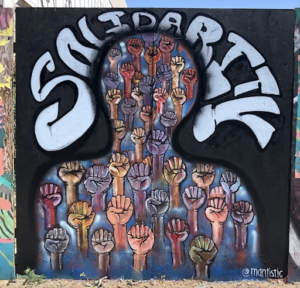
A shift is needed in our country. Our neighbors and loved ones are being terrorized by lawless federal agents on their way home from work and school. Our tax dollars are being used to escalate dangerous wars and attacks, launching missiles at schools and hospitals around the globe. Speaking out against injustice is condemned with surveillance, harassment, and imprisonment. While we witness and live this nightmare, we also show up to work day after day, working harder than ever, but left out of the key decisions that shape our lives.
While it’s easy to name our obvious opposition, we must also acknowledge how our progressive movement has played a role in the moment we are in now. Whether we’ve been advocating for equitable healthcare, workers’ rights, disability justice, reproductive justice, or another critical need, we operate in silos that fragment our movements and weaken our collective strength. Collectively, our vision lacks clarity, deep thinking, and cross-sector planning, leaving many of us feeling disconnected and uninspired. We have democratic leaders with corporate interests abandoning their constituents and delegitimizing our democracy. When our leaders have no plan, it leaves our people without hope.
Our story doesn’t end here — our lives and legacies reach further, and we have the power to rise higher, do greater, and become more. We’ve forged a North Star to lead our community toward a new era of freedom — Freedom 2.0.
The most powerful symbol of the underground railroad was the North Star. The North Star served as a bright, consistent guide on the journey toward freedom for enslaved Black people. It told our ancestors they were headed in the right direction as they saved their own lives from violence and exploitation. In situations of life or death, the North Star helped our ancestors travel through dark woods toward safe houses, railroad stations, and to freedom in northern states. That same symbol still holds deep meaning today as we carry our ancestors’ dreams of freedom forward.
At the National Black Worker Center, our North Star is intersectional worker power. We are strengthening and refining our strategies to shift power to the people and ensure Black workers claim and receive the full value of their labor. We envision transformed labor practices that respect Black workers and pay us our worth. We are working to build environments where Black workers are not just fighting back against exploitation, but also actively shaping every aspect of our work — what it looks like, how it’s valued, and who it serves. We are advocating for workers to have the ability to define and set standards for safety, wage equity, career pathways, and labor protections that follow workers when they transition between jobs.
To achieve intersectional worker power, we must step out of silos and embrace an intersectional approach that recognizes how anti-Blackness shapes the exploitation of all workers. To build integrated ecosystems, we must shape our organizing spaces into cross-sector community hubs for Black workers to connect and strategize across fields and professions. We’re reimagining worker centers, unions, and mutual aid groups, making sure we include cultural workers, artists, and healing practitioners in our organizing as core members and contributors, not add-ons. These shifts will support Black workers in building new labor systems where healthcare, childcare, and housing are seen as core worker issues, not separate matters.
The voices and experiences of Black workers are valuable to our society and needed in our movements. We can begin to harness our collective power today, and we can start from where we’re at. Join our efforts to build intersectional worker power by finding a Black Worker Center near you, or starting one in your city. Despite what we’re up against, our North Star keeps us grounded and focused, and uniting our efforts brings us closer to the dignity and respect we deserve.

So you think you're ready to take direct action, think again!
 The year is swiftly approaching its end, and we continue to witness violations of our constitutional rights and attacks on our most fundamental freedoms. We can only sit back and watch this undeniable collapse for so long. As with much of the progress won in this country, Black leadership is needed to get us out of this mess and help build a future rooted in joy, justice, and self-determination. Many of the freedoms we took for granted, from voting rights to labor protections, were born out of direct action. And just like our ancestors and activists who fought and survived before us, we must be smart, safe, and strategic about how we move forward. Collectively, we have the tools, the skills, and the wisdom to win justice and protection for our communities, and we can take lessons from the centuries of organizing and direct action that got us to this point. The following considerations can help guide our steps:
What is the purpose?
At the core of any direct action, know what goals you and your group hope to achieve, and align these goals with your overall purpose and shared values. Keep your goals actionable — specific, measurable steps you can actually take — not vague intentions. Be clear on what your demonstration aims to achieve. For example, No Kings Day was a powerful, unified stance that mobilized communities across the nation and showed our collective resistance to authoritarianism. But what comes after walking and holding signs? Collectively, we must align on what we want in place of a king, and outline the demands and actions needed to work towards that goal.
Who are the organizers?
It is our relationships that keep our movements moving, and we can only move as fast as the trust we build. When planning or participating in any action, it’s important to know who you are working with, their track record, and where your values align. Ask yourself: Who is responsible for making decisions, and how are those decisions being made? When trust and alignment are secured, we move stronger and more effectively together.
What are the demands?
Similar to actionable goals, actionable demands are clear, specific, and lay out the exact change that needs to take place for the benefit of communities. They name the target institution, agency, or elected leader who can make that change, and propose a timeline for when it should be done.
How do you contribute to the plan?
Direct action without meaningful engagement of Black communities is a losing proposition. Black organizers and communities have shaped many of the direct action strategies used today, from the rebellions led by millions of enslaved people in Haiti and across the South from the 1600s to the 1800s, to the civil rights era actions of the 1960s that confronted segregation and demanded fairer jobs and freedoms for Black people. Those of us who are most impacted by systemic issues often have the most insight and the clearest vision of the solutions that are needed. If Black voices aren’t meaningfully engaged in direct action, it is easy to unintentionally replicate the very dynamics we want to challenge, exploiting the struggles of Black communities and missing the mark on true progress that meets our collective needs.
What is the risk?
It is also important to seriously consider the risk level of the type of action you are taking. Be realistic about the risks a particular action poses to yourself, your members, and your community, and communicate those risks with your people. Then, create a safety plan that folks can easily turn to if your planned action gets interrupted or turns hostile. Make sure you consider:
- What measures are needed to keep people safe?
- Will you need security?
- How will you protect your members from facial recognition technology?
- Who are the points of contact?
- Are people willing to go to jail, fight, or run if needed?
- If there is a likelihood of arrest, do you have the resources to get people out of jail?
How is success measured? How is the action being evaluated?
It takes time and energy to plan a direct action — don’t let that work be in vain. Know what success looks like to you before you start, and work with your team to define success in a way that reflects your core values and overall vision. Success can include big wins, like changing public opinion or a policy win, as well as smaller milestones, like reaching new audiences or growing your base.
What is the plan for sustained engagement?
The fight for our freedom is never a one-time event. Many fights for our rights were organized over years and even decades of collective organizing, and involved a range of strategies that included marches, boycotts, strikes, and civil disobedience.
Have you checked the facts?
Rumors travel faster than the truth, especially in emotionally charged situations that require a rapid response. With every step of direct action planning, it is critical to fact-check everything before sharing information or making decisions. Be sure to check your source, look for similar reports from multiple credible outlets, and verify that the reports are relevant to your current situation. Ask critical questions to combat any misleading information, and confirm that quotes or statistics weren’t taken out of context.
Behind every direct action are the people who carry it forward. The relationships we build, and the care and consideration we bring both to our strategies and to each other, can strengthen and sustain our work towards lasting change. By being intentional and respectful about co-creating our organizing efforts, we can build more legitimate movements and shape goals and tactics that more effectively meet everyone’s needs. The generations to come rely on the actions we take today — let’s work to anchor our actions in trust, alignment, and a shared commitment to more liberated futures.
Weaving Intersectional Movements Rooted in Power and Dignity
We are living through some of the most atrocious attacks on our communities — politically, economically, and psychologically. Before our eyes, we are witnessing attempts to reverse the progress we’ve made in achieving safer workplaces, fairer wages, and strengthened benefits for working people. Workers across the nation are facing rising challenges, from the dismantling of diversity and equity programs and weakened union protections to mass federal layoffs.
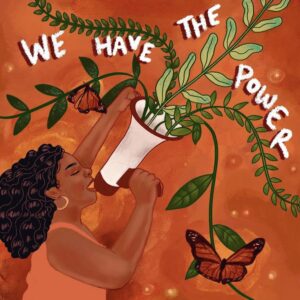
As I reflect on these challenges, I am reminded that this country was never built for us to thrive. Our labor system was built on racism and exploitation. The country is intent on keeping us divided, using fear-based mongering, disinformation, and emotional manipulation to drive wedges across race, class, gender, and ability. While the sources of these attacks are clear, we must also acknowledge how a fragmented progressive movement has limited our collective power. Dean Spade reminds us that solidarity across our issues and identities is critical for building powerful movements. Yet today, too often, our organizations — whether focused on health, LGBTQ+ advocacy, workers’ rights, disability justice, or beyond — operate in silos, weakening our shared strength.
After decades working in the labor movement, I know how deep, committed work on single-issue campaigns and advocacy efforts has helped achieve milestone wins for people’s rights. But single-issue fights can also leave us vulnerable. Today, we have a labor movement that has been too silent on wage disparities across racial and gender lines. The Black unemployment rate is the highest it's been in years at 7.5%, likely leaving well over a million Black workers without jobs. Yet, many Unions have been radio silent about this impact on Black workers. What happens to Black workers is a canary in the coalmine for what’s to come, and we can’t ignore these blaring warnings.
Racism is a commonly used strategy to divide and exploit workers, and it is extremely effective. With roots in slavery and genocide, corporations and systems have profited from the labor of Black people and immigrants to build entire railroads, cities, and keep the economy running. This exploitation still exists today, as many of us are working harder than ever but still struggling to meet our basic needs. But when we treat these experiences as problems only impacting Black people and people of the global majority, we let the lie persist that whiteness offers protection. That lie makes it easy for the powerful few to push a narrative that white workers are safe from long hours, wage theft, and dangerous conditions, but no one is immune when systems are designed to exploit all of us.
The truth is that racist systems have created intersecting crises that harm everyone, from climate emergencies and regressive policies to anti-Blackness and xenophobia. The first step toward creating intersectional movements is to recognize that race is everyone’s issue. We need to have more conversations about how anti-Blackness weakens our movements and leaves us all vulnerable to discrimination, unfair policies, and exploitation across racial identities.
Despite being built on racist foundations, this country runs on the labor of workers whose voices and struggles are deeply interconnected. I’m inspired by California Working Families Party organizers, who not only fight for fair wages but also partner with housing advocates to help families keep their hard-earned income. At the National Black Worker Center, we’re advancing movement intersectionality and collective power. This summer, we launched a webinar series featuring a three-part workshop on decolonizing gender, which highlighted Indigenous and other non-Western perspectives on gender, sexuality, and identity. These conversations underscored that dismantling the gender binary is inseparable from the broader fight for Black workers and our collective freedom.
All working people are at the edges of any revolution. The fight to build power with those who are the most vulnerable begins with workers and ripples outward. Our movements are strongest when we recognize that none of us are free until all of us are free. When we fail to acknowledge how the struggles of some impact us all, we miss the opportunity to create strategic, meaningful intersections across movements that truly uplift every worker. As the fight for our freedom continues, we must weave together our movements, break out of our silos, and fight for each other.